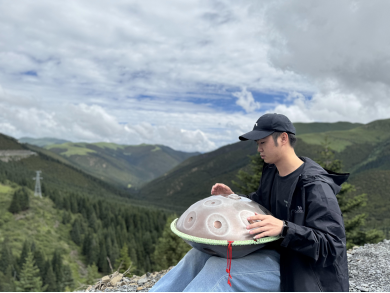

Short answer: You can play your first melody in 10 minutes. But like any instrument, the journey never really ends.
The handpan is famously one of the most beginner-friendly instruments in the world. Unlike a guitar or violin, there are no painful finger placements or buzzing notes to fight. The dimples (notes) are laid out in a circle, and hitting any of them sounds beautiful.
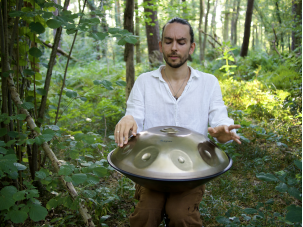
Week 1: Instant Gratification
Within your first hour, you will be able to play a basic rhythm. Within a week, most students can coordinate both hands to play simple patterns. Because the scale is pentatonic (five notes) on most entry-level handpans, you literally cannot hit a “wrong” note.
Months 1–3: Fluency
After three months of casual practice (20 minutes a day), you will likely be comfortable with:
l Basic slap techniques
l Moving between the Ding (center note) and the Gu (bottom shell)
l Improvising melodies without thinking
Years 1+: Mastery
To play like professionals such as Malte Marten or Manu Delago takes years. Mastery involves complex polyrhythms, dynamic control (playing very soft vs. loud), and deep emotional expression.
The Truth
You can enjoy the handpan on day one. You can perform for friends after three months. But the beauty of the handpan is that even masters say they are still learning. It is not about speed. It is about the journey of sound.
Verdict: 10 minutes to start. A lifetime to love.